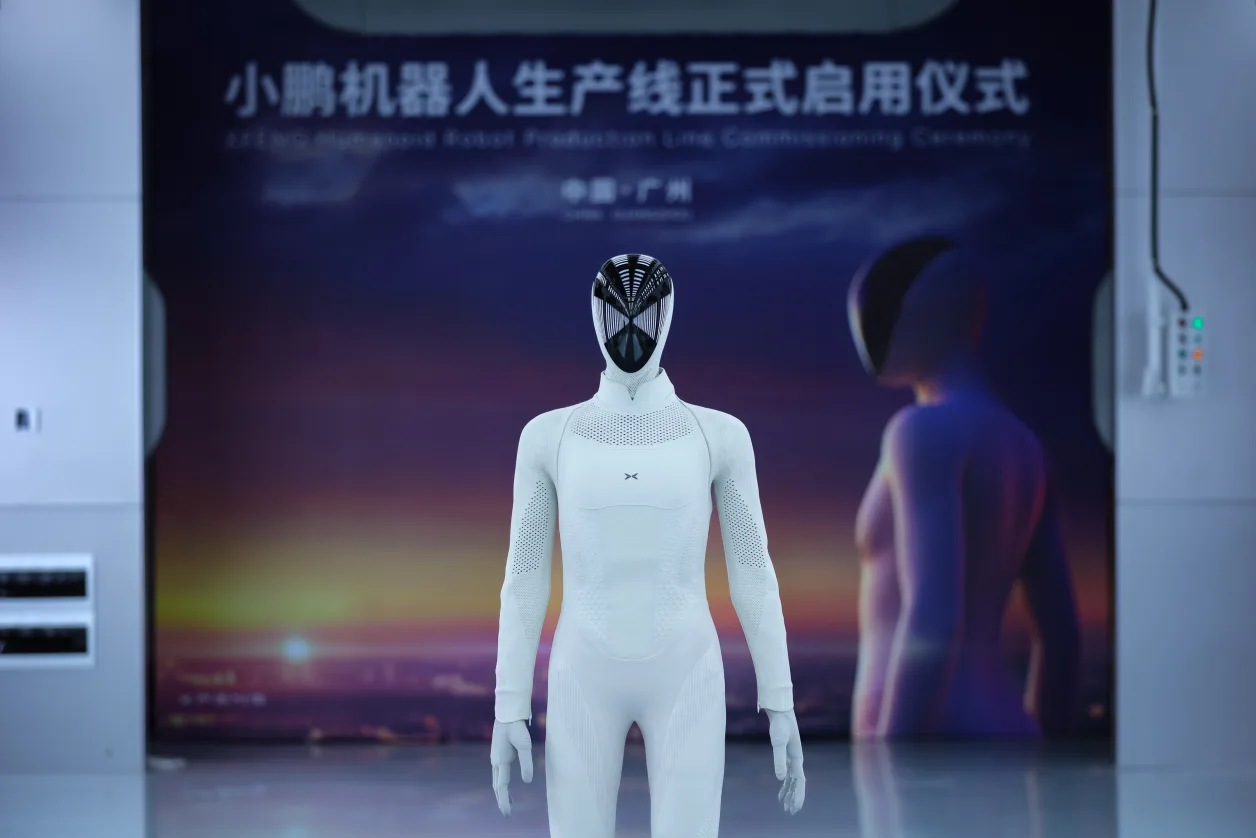
Scheduled for delivery in 2027! XPeng's first humanoid robot autonomously rolls off the production line: 76 degrees of freedom throughout its body
By DianMa Auto · 2026-09-08 · Technology
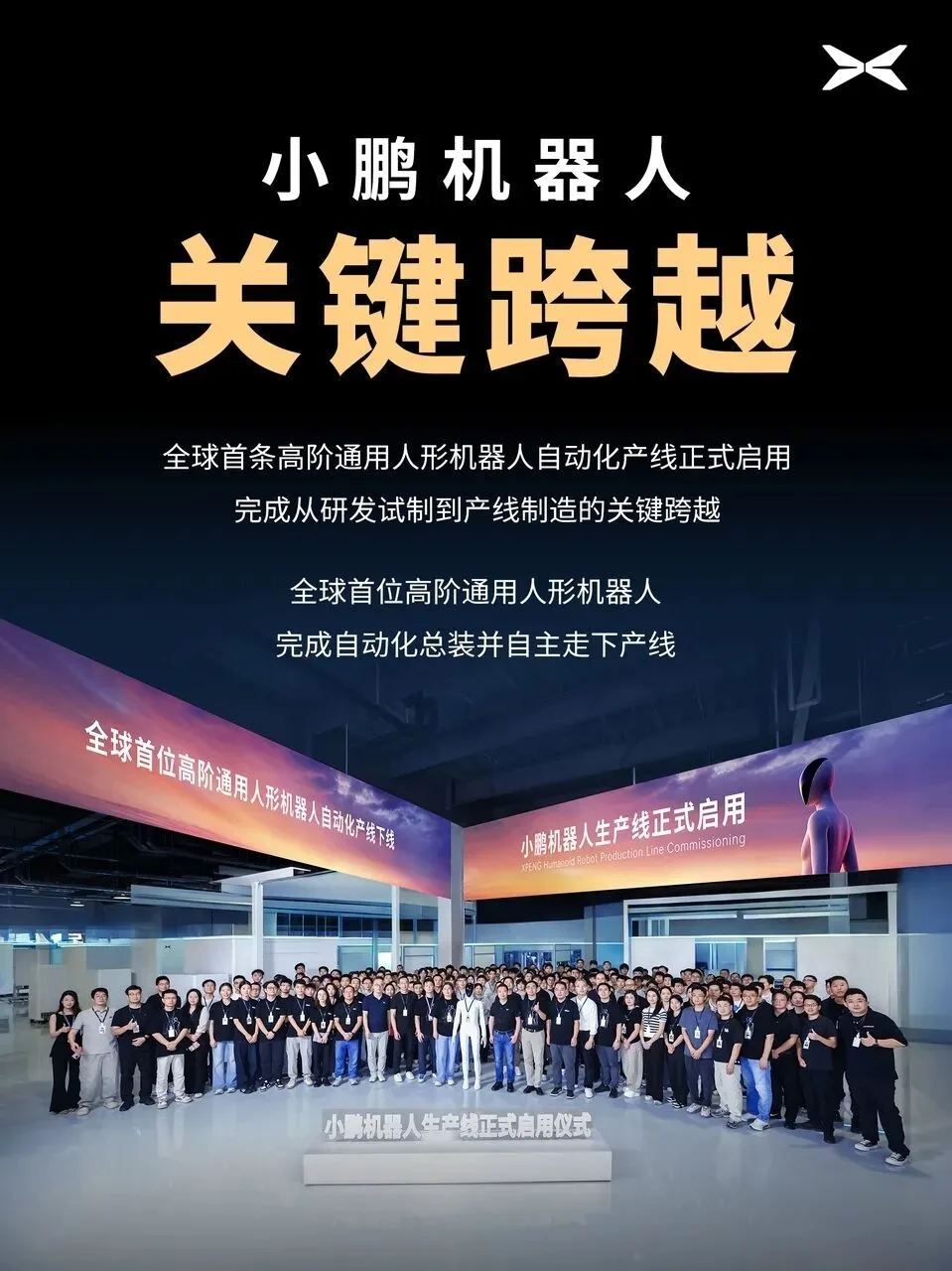
On September 8, XPeng announced the official launch of its robot production line, with the first IRON humanoid robot completing automated final assembly and walking off the line under its own power.
This is the world’s first automated production line dedicated to high-level humanoid robots, entirely self-designed and developed by XPeng, with a core process automation rate exceeding 80%.
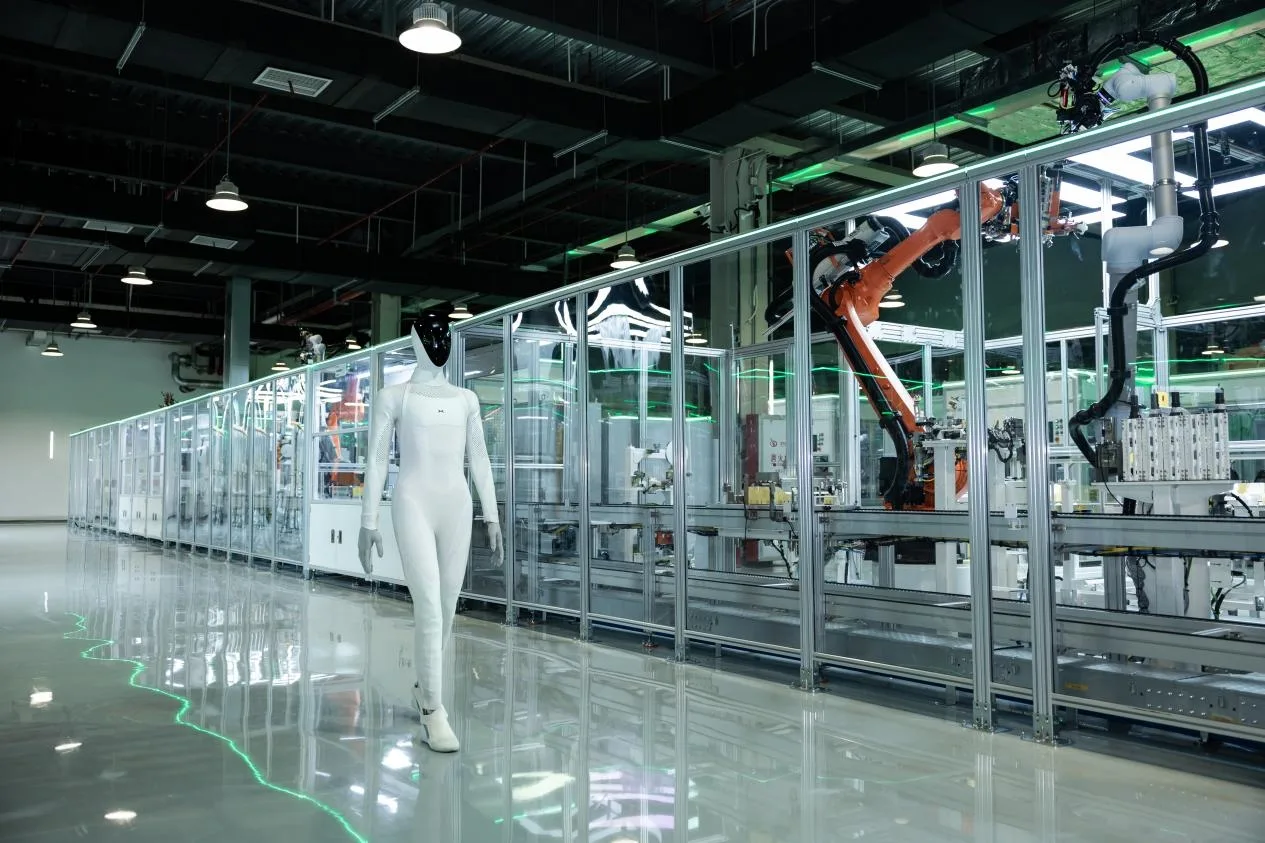 The production line borrows mature quality control systems from automotive manufacturing and adapts them to the precision assembly requirements of humanoid robots. Bringing car-making QC logic to robots makes a lot of sense actually.
The joint and wiring complexity of a humanoid is arguably on par with a car, so being able to reuse automotive manufacturing experience is a genuine built-in advantage for XPeng.
IRON serves as the core vehicle of XPeng’s physical AI strategy, positioned as a high-level general-purpose humanoid robot. On the hardware side, the robot features 76 degrees of freedom across its full body and 21 in each hand, placing it at the industry’s front tier in motion capability. It uses a first-of-its-kind fully covered flexible lattice structure that balances a human-like form factor with safety.
 For computing power, IRON is equipped with three Turing AI chips delivering 2,250 TOPS of effective performance. XPeng’s physical AI large model is deployed on-device, meaning the robot can handle complex tasks independently without remote control.
That compute figure is frankly absurd for a humanoid robot. For context, Tesla’s Optimus is still primarily running on FSD chip architecture, and the computing power gap between the two is clearly not in the same league.
XPeng Chairman He Xiaopeng called automated production of high-level humanoid robots a zero-to-one exploration. The robots will initially take on hazardous and repetitive work, leveraging full generalization capabilities to operate in real-world scenarios before gradually entering daily life as companions.
Per the company’s roadmap, XPeng’s robots will enter mass production by end of 2026, starting with commercial deployment in XPeng stores and campuses, with formal market delivery in China and overseas targeted for 2027. In August, XPeng’s robot business completed its first funding round exceeding $900 million.
From production line activation to actual delivery there is roughly a year-long window. Whether 76 degrees of freedom and 2,250 TOPS can translate into genuine productivity in real-world scenarios will depend entirely on how fast XPeng iterates from here.