He Xiaopeng says autonomous driving should skip L3 and go straight to L4, since L3 adds no safety or better experience
By DianMa Auto · 2026-10-21 · Industry
Speaking at the 2026 World Intelligent Connected Vehicles Conference, XPeng chairman He Xiaopeng said publicly that autonomous driving should skip from L2 straight to L4, arguing that L3 only shifts responsibility onto the system without improving safety or refining the experience.
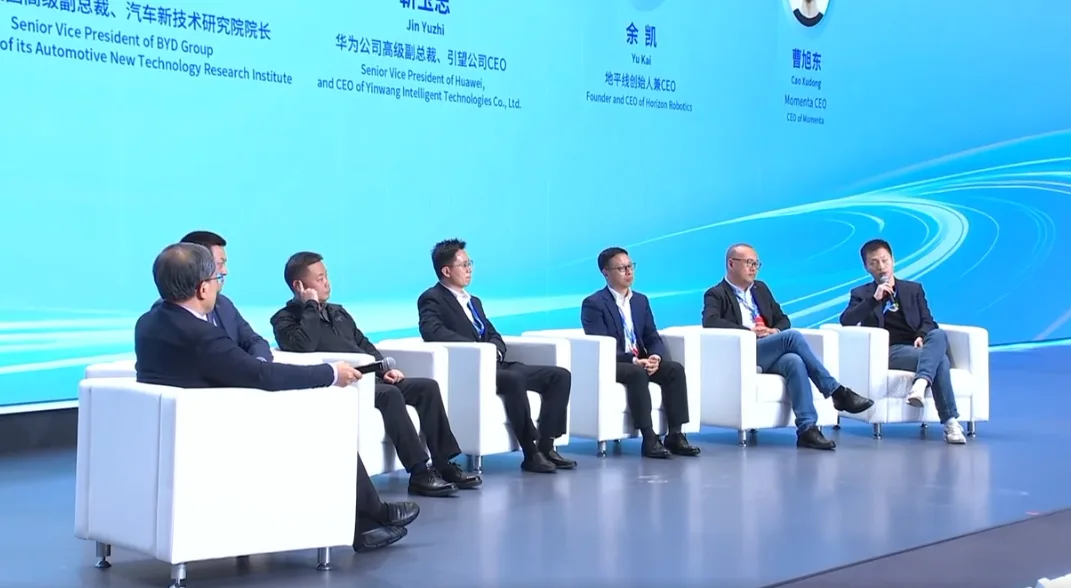 He admitted in his speech to holding plenty of contrarian views, recalling that he once test-drove an Audi's L3 feature activated on a few European highways and had it active for only a few minutes over a whole day, a poor experience. His conclusion is that L3 shifts responsibility in some sense but does not improve the experience or safety, and safety is what matters most.
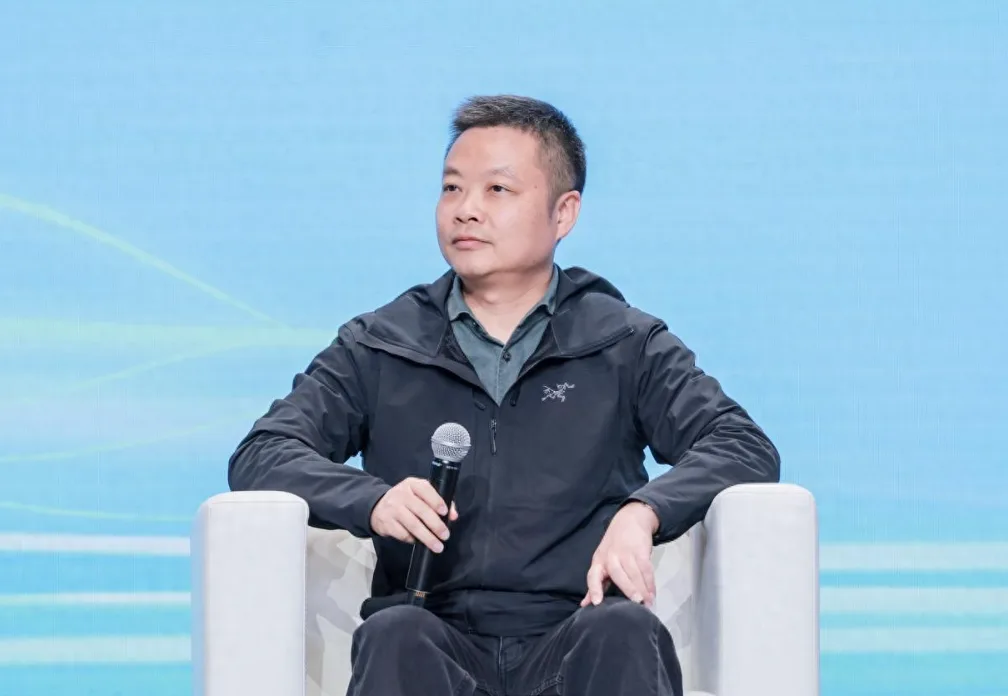 In his view, XPeng and Tesla being able to drive in France actually means bringing L4 capability into production cars, since vehicles that recognize a pedestrian waving, pull over to the curb and follow local rules and culture on complex roads they have never seen are already doing what L4 is supposed to do.
But he raised a question mark over whether safe intervention rates per 10,000 km or even 100,000 km (about 6,200 or 62,000 miles) can improve tenfold every year, and he thinks that is very hard. Scenarios such as snow, swamps and grass require full integration of chassis motion control and autonomous driving, a challenge he says cannot be solved in a year or two, though everyone is working on it.
He also posed a deeper question, why autonomous driving works well in some places but not others, noting that Tesla drives well in Silicon Valley, poorly in New York, worse in Australia and France, and not well in China either.
Behind that lie differences in technical architecture and policy logic, and he said XPeng recently took part in United Nations work on rolling out autonomous driving, hoping to bring China's experience of taking L2 global into compliant hardware and software deployment.
On the L4 timeline, He gave a clear judgment, expecting L4 technology to land around the second half of 2028, requiring the whole system of hardware and software to be developed together.
From a policy angle, that means sometime between 2028 and 2032, with different countries, regions and scenarios moving at different paces. Robotaxis may come a little faster and fully driverless operation will also move sooner, but driverless cars with people on board may take several more years in different regions.
He also argued that L5 will be redefined in the future, since the current definition is technical rather than based on safety and controllable scenarios. A car is essentially a passive autonomous super robot that needs to work actively 24 hours a day, and government oversight systems must make autonomy observable and controllable for safety.
He judges that the most promising directions for autonomous driving are L2, L4 and L5, with the best L3 merely an enhanced version of L2.
He also stressed that a true L4 company must start by exploring Robotaxi, since Robotaxi demands 100 times the safety factor and a higher mileage intervention rate, and how it merges capabilities with L2-level cars is a very interesting direction of change.