FAW Just Built the World's First Perovskite Solar Car Roof, and a Full-Body Version Could Add 50 Free Miles a Day
By DianMa Auto · 2026-08-27 · Technology
On August 27, FAW announced it had completed the world's first perovskite photovoltaic panoramic roof sample, the first time perovskite solar modules have been reliably integrated into double-curved automotive safety glass anywhere.
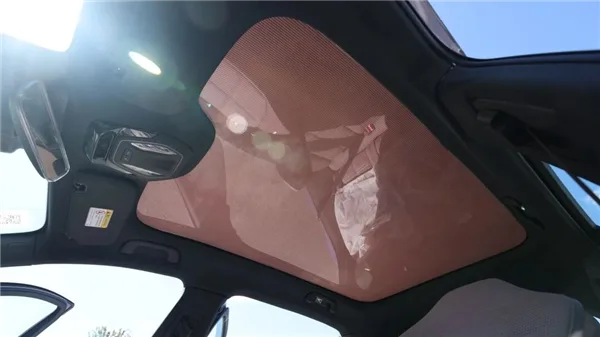 Perovskite is naturally vulnerable to water, oxygen and UV exposure, and surviving automotive temperature swings and vibration on a curved surface is a packaging nightmare.
FAW says it solved both the moisture-oxygen barrier and curved-surface bonding problems through flexible module lamination and multi-layer sealing, merging the solar film seamlessly with the panoramic roof.
The current sample peaks at nearly 300W in full sun and averages about 400 kWh per year, a little over one kilowatt-hour a day, which happens to be the perfect size for parking loads like cabin pre-cooling, the fridge and sentry mode.
Tesla owners know that pain well, since sentry mode alone can eat two to three kWh daily, and a power-generating roof patches exactly that leak. FAW's own math goes further, projecting that perovskite panels across the roof, hood and other body panels could theoretically yield 10 kWh a day, about 50 miles (80 km) of free range covering most commutes.
That 10 kWh figure is a whole-car ceiling, though, and the single-roof reality sits an order of magnitude lower, with output collapsing further in shade or overcast weather.
The bigger hurdles are automotive-grade lifespan and cost, since perovskite degradation remains the industry's unsolved lab problem, and the solar roofs on the Toyota Prius and Hyundai Sonata both died on exactly that math.
FAW itself frames this as passive supplementary charging, not a charger replacement. The road from sample to production is usually longer than the road from drawing board to sample.