Chinese Brands Will Build 1.5 Million Cars a Year in Europe by 2035, and Brussels Is Worried About Screwdriver Plants
By DianMa Auto · 2026-08-25 · Industry
Research firm Global Mobility predicts Chinese brands will build as many as 1.5 million vehicles a year in Europe by 2035.
This year's output from BYD, Leapmotor, Chery and others should total roughly 90,000, rising to one million by 2030, a sixteen-fold expansion in a decade. The demand base is already there, since Chinese groups including Geely, SAIC, BYD, Chery and Leapmotor registered nearly 792,000 vehicles in Europe in the first half of 2026, good for about 11% of the market.
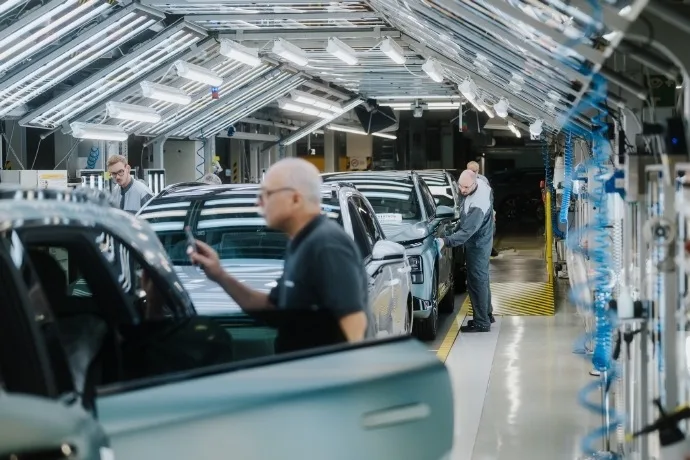 The factory list keeps growing. BYD's Szeged plant in Hungary starts production this quarter with a Spanish site under consideration, Chery's Omoda and Jaecoo brands build in a former Nissan plant near Barcelona, Leapmotor is moving into Stellantis' Zaragoza facility, Geely will build cars with Ford in Valencia, SAIC's MG picked Galicia for 2028, and Xpeng and GAC are taking the asset-light route through Magna in Graz.
The motivation is blunt, dodging countervailing duties of up to 45.3% on China-made EVs.
Brussels is not handing over the prize for free. The Industrial Accelerator Act, proposed by the European Commission this March, would require 60 to 70% of non-battery component value to be EU-made for a car to qualify for subsidies or public procurement, with foreign investors in strategic sectors facing ownership caps, local workforce quotas, R&D spending mandates and IP licensing conditions.
Sander Tordoir of the Centre for European Policy Studies warns that without such rules, the risk is pure assembly plants for Chinese components with minimal value added for Europe. Gregor Williams of the Rhodium Group adds that Made in Europe status would require most components, including the battery, to be produced locally.
American readers have seen this movie. In the 1980s, tariffs and voluntary export restraints pushed Japanese automakers into US factories, and critics dismissed those as screwdriver plants too.
Forty years on, Honda and Toyota run engine plants and R&D centers across America employing hundreds of thousands. Assembly is usually the first stop of deep localization, not the last. The EU's own impact assessment estimates the content rules would add roughly €630 to every EV's price.
The sharper question is not whether Europe becomes an assembly floor, but whether its automakers will still have reasons to build better cars once tariffs and quotas keep competition out. History has answered that one before, protection buys time, never competitiveness.