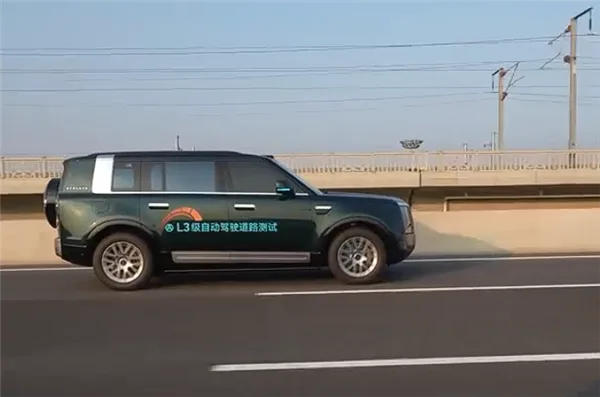
China Publishes Mandatory Safety Standard for Autonomous Driving, Effective July 2027
By DianMa Auto · 2026-08-04 · Industry
Beijing — China's Ministry of Industry and Information Technology (MIIT) has published a mandatory national standard on safety requirements for autonomous driving systems, the country's first binding regulation covering Level 3 and Level 4 automation. The standard, GB 44721–2026, was approved on July 30, 2026 by the State Administration for Market Regulation and the Standardization Administration of China, and takes effect on July 1, 2027.
Under the new rules, vehicles equipped with L3/L4 systems must demonstrate, before they can be approved for sale, that the autonomous driving system performs at least as safely as a competent and attentive human driver handling the dynamic driving task, and that it poses no unreasonable risk to occupants or other road users.
The standard also sets detailed requirements for manufacturers: a full-lifecycle safety framework covering design, development, production and post-launch software updates; simulation, proving-ground and road testing during development and validation; safe system activation and deactivation, with L3 systems required to include driver takeover-readiness monitoring; and a minimal risk maneuver — such as a safe pull-over — to be executed when the system can no longer continue the driving task. Compliance is verified by third-party testing bodies through track, road and simulation tests.
The regulation follows the UN Global Technical Regulation on automated driving (ADS GTR), which China led in developing and which was adopted in June. China's national standard builds on that international framework with more detailed technical requirements and test procedures tailored to domestic road conditions and industry practices.
The new rules are widely seen as a milestone for L3/L4 autonomous driving in China, marking the transition from pilot programs toward commercial deployment. China granted conditional market-access approval to two L3 models in 2025, and automakers including Tesla, Huawei and XPeng are awaiting the first vehicle approvals under the new framework. Manufacturers have nearly a year of transition before the standard takes effect.