BYD mass-produces its own 4D radar chip with 400-meter range and parking-lock detection
By DianMa Auto · 2026-09-01 · Technology
BYD Semiconductor announced on September 1 that its satellite-architecture 4D imaging radar chip has entered mass production, following the May debut of the Xuanji A3, which it calls China's first 4nm automotive-grade driving chip and which now serves as the radar chip's computing hub, with the two already adapted together and meeting the requirements of Tier 1 module makers.
 The chip targets the weak spot of traditional millimeter-wave radar, which lacks elevation data and struggles in complex urban scenes, and it does so on a 28nm automotive process with eight transmit and eight receive channels (8T8R), ISO 26262 ASIL B functional safety design, AEC-Q100 qualification and an operating junction temperature range of minus 40 to 150 degrees Celsius (about minus 40 to 302 degrees Fahrenheit).
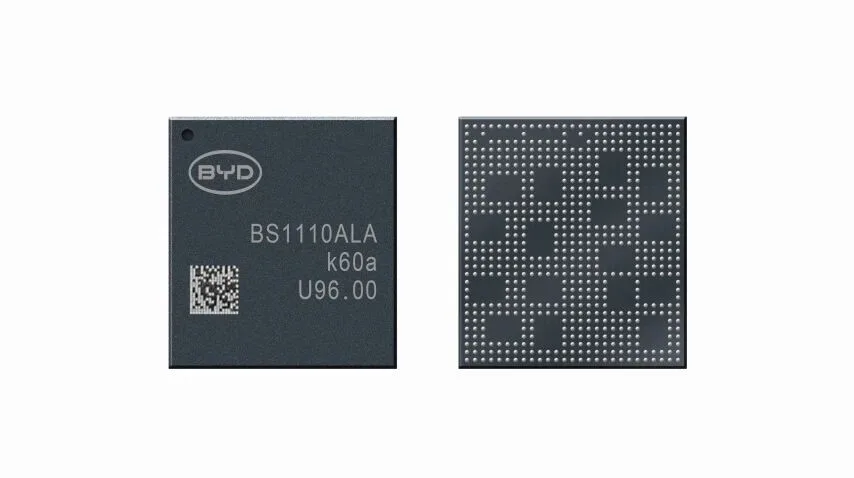 On the road, the chip delivers stable detection beyond 400 meters (about 1,310 feet) and can read the speed and position of vehicles across multiple lanes ahead, while its 0.8-degree horizontal angular resolution sharpens the line between lanes and guardrails or vehicles and pedestrians, and its 0.05-meter (about 2-inch) parking-level precision picks out low, faint reflectors like parking locks, stone barriers and traffic cones to work with 360-degree surround parking for automated entry and exit.
Built on a satellite architecture with a MIPI CSI-2 high-speed interface and compatibility with mainstream SerDes serializers, the chip slots into several mainstream driving compute platforms and supports solutions from L2 through L4, including highway pilot, urban driving, automated parking and blind-spot monitoring, while fusing with cameras and lidar for redundant perception.
BYD Semiconductor also plans a 4T4R MMIC, a 6T6R SOC for in-cabin and side-door sensing and a UWB SOC down the line, and the bigger picture is that BYD is now building both halves of its smart-driving stack in house, the Xuanji A3 compute brain and the radar sensing front end, a move that cuts cost and gives it a homegrown card to play against lidar-centric rivals.