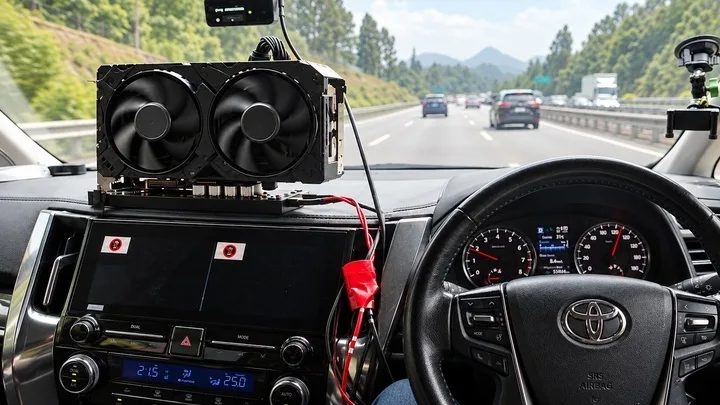
A Toyota Alphard with an RX 9060 graphics card on the dash, going hands-free at 110 km/h
By DianMa Auto · 2026-10-13 · News
A Reddit post has gone viral after an owner plugged an AMD Radeon RX 9060 graphics card into the center console of a 2021 Toyota Alphard, letting the old van with no driver-assist features at all run hands-free highway driving.
In the video, the Alphard drives itself at around 110 km/h (about 68 mph) on the highway with the RX 9060 slotted into the middle of the dashboard, its wiring harness tangled and running down the center console.
 The Alphard is not running some one-off homemade setup, since the core device comes from San Francisco startup comma.ai.
A palm-sized host unit priced at $999 mounts on the windshield with a built-in camera and an infrared driver-monitoring lens, and installation requires no replacement of any factory parts, with the harness plugged inline near the rearview mirror and powered through the OBD port.
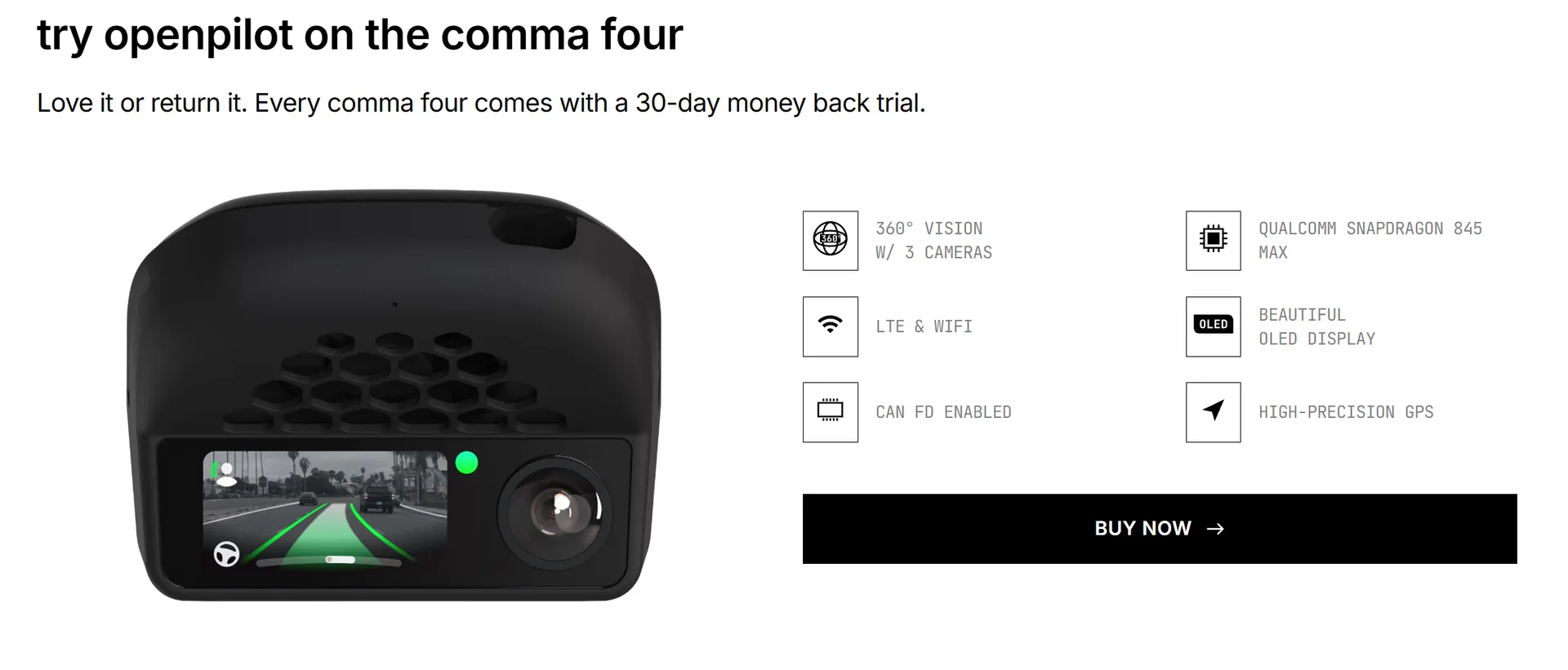 The device captures camera footage and then connects to the CAN bus to send commands to the steering, braking and throttle controllers, taking over the driving.
But windshield-mounted devices are limited by power draw and heat, running only an ordinary automotive chip with a model of just 29M parameters, which caps perception depth and prediction for distant stationary obstacles. The latest comma four even dropped its interactive screen to give all internal space to cooling, in a bid to stop summer heat from throttling performance.
That led comma.ai and its community to come up with an external graphics card setup, using the device's expansion port to connect a desktop-class GPU. With the RX 9060 plugged in, this Alphard gains 21.4 TFLOPS of single-precision compute, a hundredfold jump in FLOPs.
Backed by 288 GB/s of memory bandwidth, the car runs a local end-to-end model called Chestnut, whose parameters surge from 29M to 880 million, matching the level of Tesla's HW4 platform. Beyond graphics cards, some players even use a Mac mini as their in-car host.
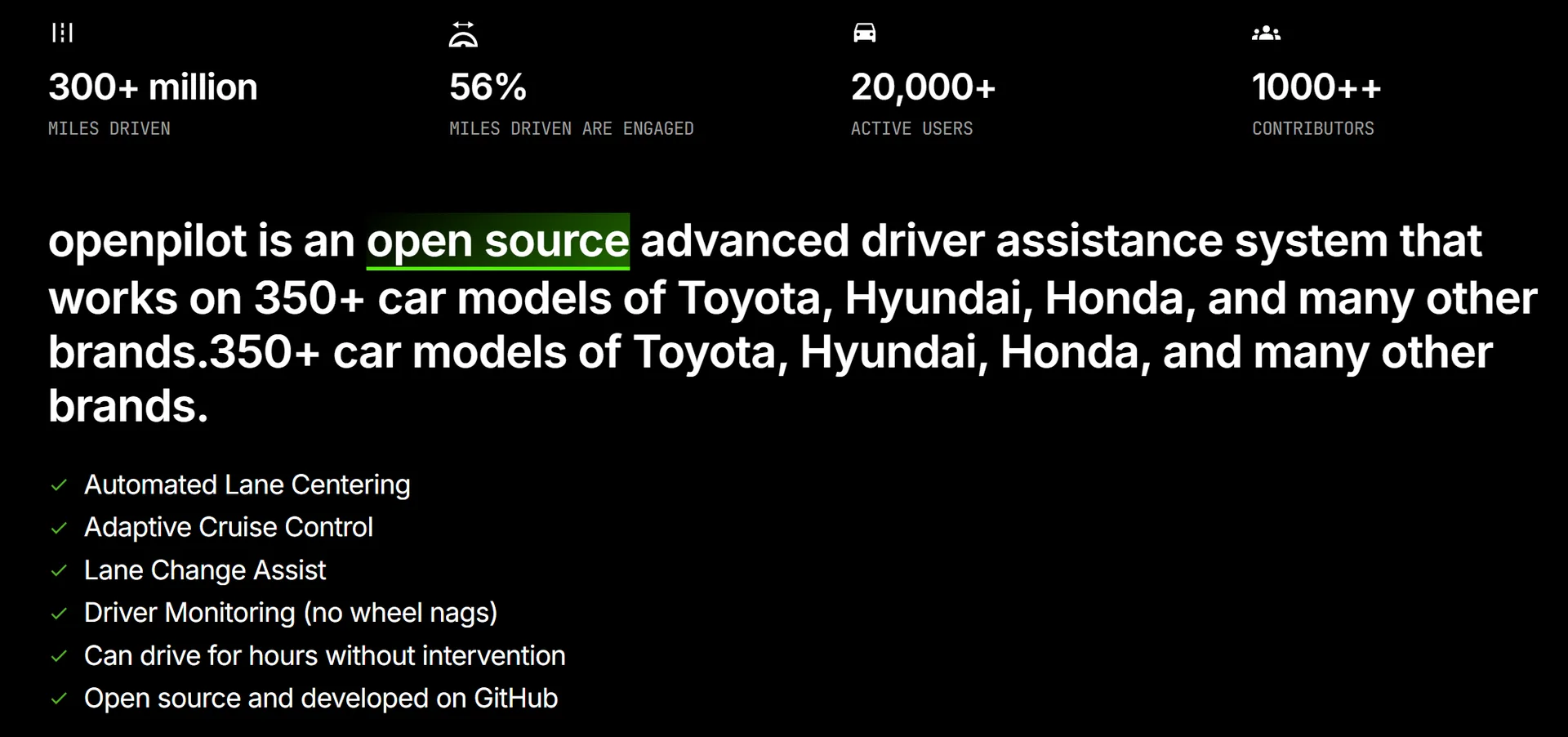 comma.ai founder George Hotz is the famous hacker Geohot, who unlocked the first iPhone's network lock at 17 and later cracked Sony's PS3. In 2015 he turned down Elon Musk's recruitment offer to start comma.ai, and when NHTSA questioned the company just before its first product shipped, Hotz canceled the launch and put all the code on GitHub as open source, which is how openpilot was born, a system now compatible with more than a hundred models.
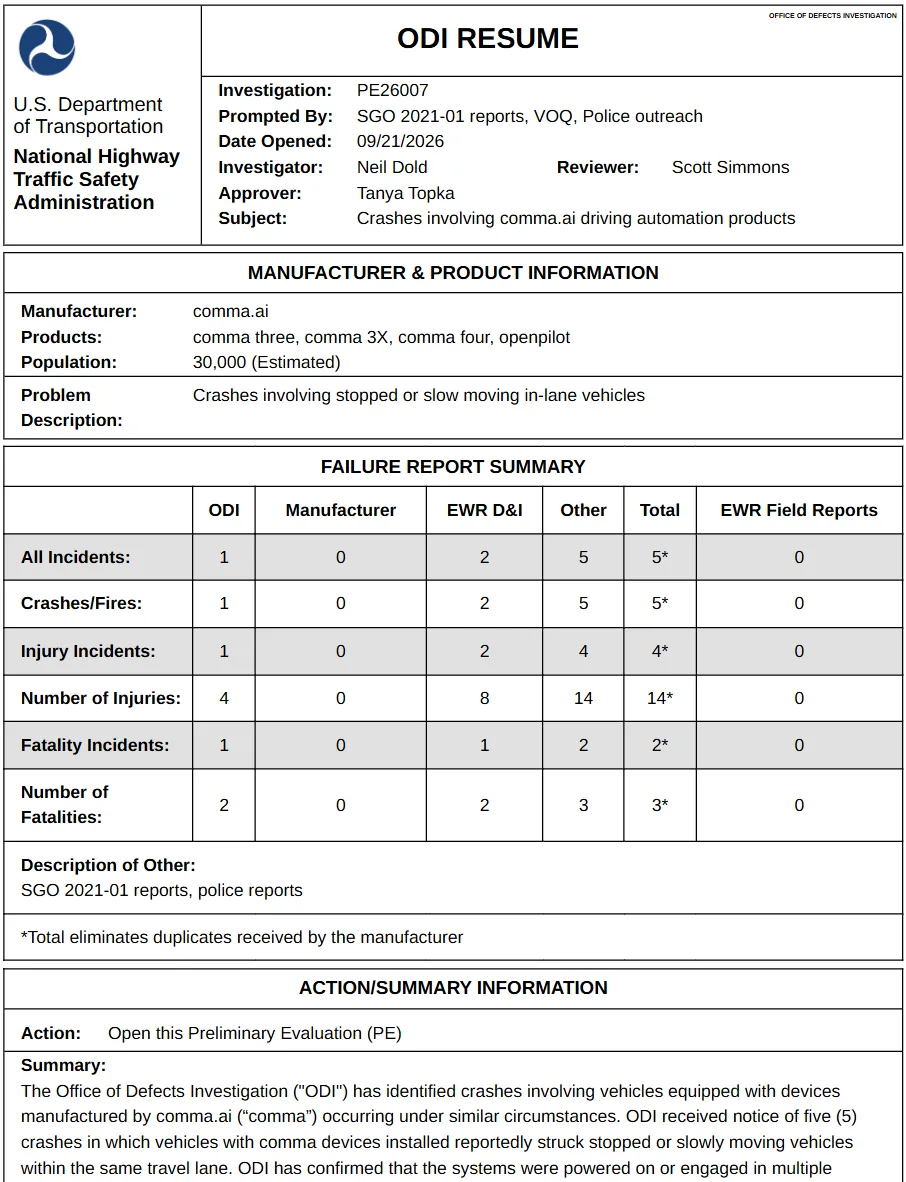
Still, the system carries legal and safety risks, since last month the US NHTSA formally opened an investigation into comma.ai's three hardware generations and its openpilot software, covering about 30,000 vehicles. Public records document five serious highway crashes that killed three people and injured 11, almost all because the system failed to avoid stationary or slow-moving vehicles in the same lane.